
More Than 1 Million Antiquities Worth an Estimated $3.5 Billion Have Been Returned to Their Countries of Origin, New Report Finds
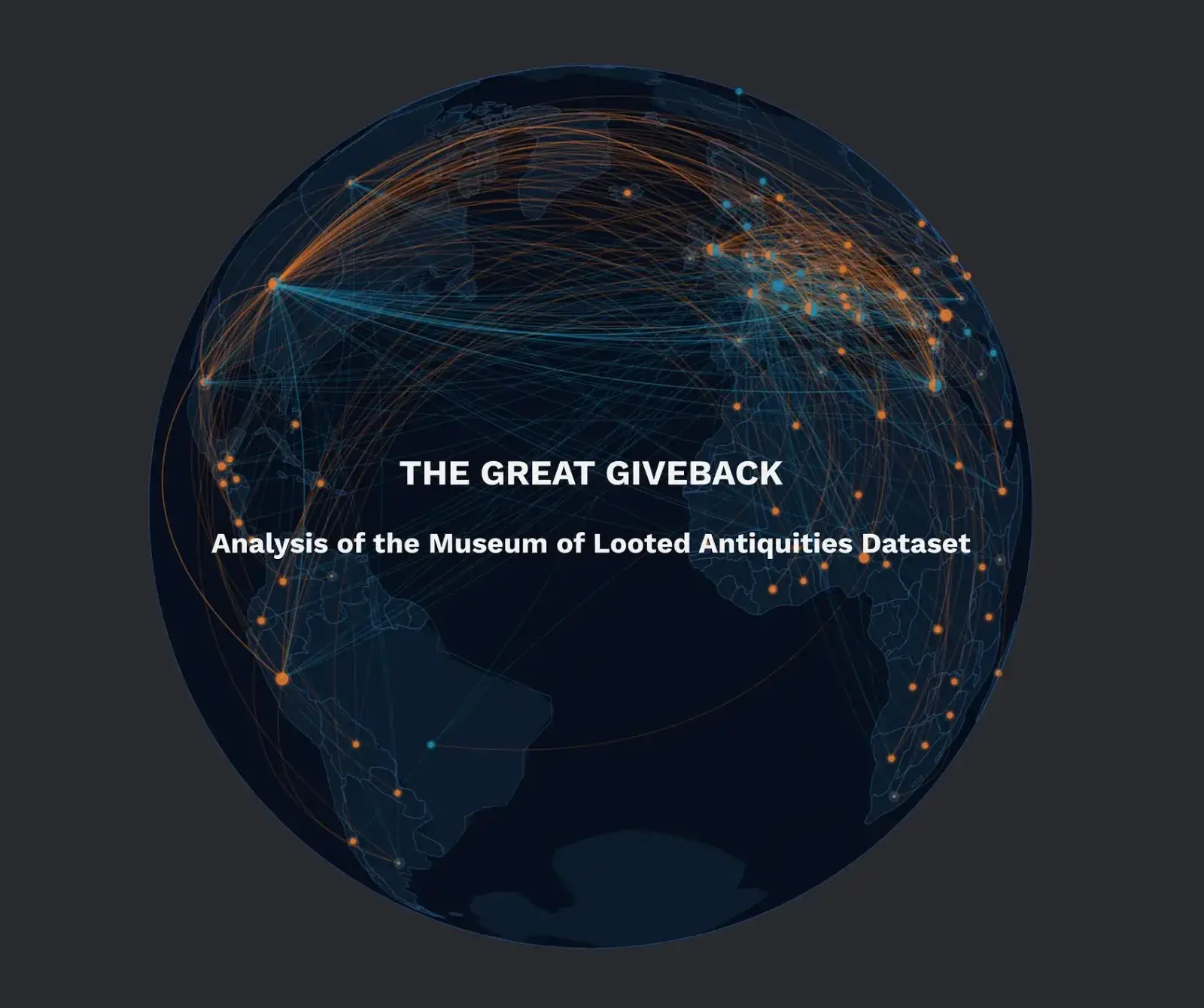
The Great Giveback, an analysis of data collected by the Museum of Looted Antiquities, examines nearly 1,400 repatriation cases since 1950 and finds returns are rising sharply, span more than 100 countries, and are driven by sustained national campaigns, specialized law enforcement and returns from U.S. museums.
More than one million antiquities and cultural objects, with an estimated market value of more than $3.5 billion, have been returned to their countries or nations of origin since 1950, according to The Great Giveback, a new report released today analyzing data from the Museum of Looted Antiquities (MOLA), a project of the non-profit Achilles Research Group, and the Antiquities Coalition.
The report analyzes 1,391 repatriation cases involving 1,057,991 objects documented by the Museum of Looted Antiquities, the only global record of antiquities repatriations.
Reported valuations are available for 58% of the returned objects (621,062) and total $2.06 billion in 2024 dollars, an average of $3,323 per object. Applying that average to the remaining 436,929 returned objects yields an estimated total of more than $3.5 billion. More than $1.6 billion of the documented value came from repatriations from the United States. The returns include objects seized as part of a crackdown on the illicit antiquities trade, as well as voluntary returns of colonial-era objects.
Jason Felch, MOLA’s founder and a lead author of the report, began investigating antiquities trafficking as an investigative reporter at the Los Angeles Times in 2005 and has collected data on repatriations over two decades, launching MOLA in 2024 to share this effort and analyze the results.
“The data collected in this report trace the outlines of a broader cultural shift taking place around the globe. It is a growing movement to reckon with the past collecting practices, to pry open the archives and memories of that era and reconsider what was right and wrong — and where these ancient objects belong today,” Felch said. “Repatriations of antiquities make news every day, but are still poorly understood. MOLA aims to answer the broader questions about these returns: why and where they happen; who are the key actors in the global black market for cultural objects; what is the financial and cultural impact of the returns; and what do they tell us about the broader art market.”
“One of the greatest obstacles to effective action has been the lack of reliable data,” Deborah Lehr, founder of the Antiquities Coalition, which funded and co-published the analysis. The report’s purpose, she adds, “is not simply to count repatriations, but to understand them: to move beyond individual headlines, identify broader patterns, and give policymakers, researchers, institutions, and communities a stronger basis for action.”
KEY FINDINGS
- A growing trend. Returns have surged since the mid-1990s. 2024 was the largest year on record by number of cases, with more than 140 repatriation cases involving tens of thousands of objects. The value of returns exceeded $250 million in 2023 alone.
- A global issue. MOLA has documented repatriations to more than 100 countries and dozens of sovereign Indigenous nations, arising from trafficking investigations, colonial-era removals and Indigenous heritage claims.
- Sustained engagement is associated with more returns. Countries that have made repatriation a sustained priority, including Türkiye, Egypt, Italy, Peru, Iraq and Saudi Arabia, are among those receiving the most objects. Egypt, Türkiye and Peru have each received more than 50,000. The data do not establish the effect of any single measure.
- Specialized law enforcement makes a difference. The Manhattan District Attorney’s Antiquities Trafficking Unit has recovered approximately 6,400 objects valued at $495 million and returned approximately 6,250 of them to 40 countries. In 2025 alone, Italy’s Carabinieri TPC recovered 75,009 pieces of cultural property valued at €73 million ($82 million) and returned 146 items to 14 countries. Law enforcement seizures are the largest category among the 1,228 cases for which a reason for return is known.
- U.S. museums account for significant returns. Eighty-one U.S. museums have returned 101,472 objects, roughly one in ten of the documented returns. Valuations for 40,391 of those objects from 29 institutions total more than $312 million, and MOLA estimates the value of all documented U.S. museum returns at $785 million. These returns occurred under varied circumstances, including law enforcement seizures, legal claims and, increasingly, voluntary action.
RECOMMENDATIONS
The report calls on international bodies to support multilingual data collection and common categories for repatriation mechanisms; on governments to designate a national point of contact for repatriation claims and publish non-sensitive details of completed returns; on museums to preserve and release public records of returned objects; and on dealers and auction houses to keep and fully disclose provenance records and adopt enhanced due diligence on antiquities, noting that an object’s absence from a stolen-art database is not, by itself, evidence of lawful ownership or export.
ABOUT THE DATA
MOLA collects up to 57 types of data on repatriation cases from publicly available sources, including court records, government documents, museum archives and media reports, supplemented by Freedom of Information requests. Records are compiled by a global team of volunteer contributors and peer-reviewed by MOLA’s editorial team. The project seeks to eventually capture data on all returned antiquities since 1950.
ABOUT THE ORGANIZATIONS
The Museum of Looted Antiquities (MOLA), launched publicly in June 2024 by Jason Felch, is a project of the Achilles Research Group, a U.S. non-profit research consortium based in Arlington, Virginia. The report was compiled with the support of the Antiquities Coalition, which was founded in 2014 by Deborah Lehr and works with governments, law enforcement and the diplomatic community to combat cultural racketeering. The report’s lead authors are Jason Felch and Katherine Davidson.